
An asbestos inspection before demolition is a mandatory legal requirement in Australia that identifies hazardous asbestos-containing materials before any building disturbance occurs. Known formally as a demolition asbestos survey, this process protects workers, neighbours, and property owners from one of the most dangerous occupational health hazards in the construction industry. Skipping it is not a grey area. Under Australian Work Health and Safety regulations and EPA guidelines, you cannot legally demolish without a completed survey and the required notification period. This guide explains what the law requires, how the process works, and what happens when it goes wrong.
What are the regulatory requirements for asbestos inspection before demolition?
Australian law treats pre-demolition asbestos inspection as a non-negotiable prerequisite, not an optional safety measure. Federal regulations and most state laws require a completed asbestos survey before a demolition permit is issued. You must also file a formal notification with the relevant authority at least 10 working days before work begins. That notification window exists so regulators can review the survey findings and confirm safe work plans are in place.
The key legislative frameworks governing this process in Australia include:
- Work Health and Safety Regulation 2017 (WHS Regulation): Requires identification of all asbestos-containing materials before demolition or refurbishment work begins.
- NSW EPA guidelines: Set environmental obligations for the disposal of asbestos waste generated during demolition.
- Safe Work Australia codes of practice: Specify how surveys must be conducted, documented, and reported.
- Local council demolition permits: Require a completed asbestos survey report as a condition of approval in most jurisdictions.
Non-compliance carries serious consequences. Regulators can issue prohibition notices, stop-work orders, and substantial fines. In the most serious cases, enforcement includes custodial sentences for individuals who knowingly expose others to asbestos. That is not a theoretical risk. Prosecutions under WHS legislation have resulted in criminal convictions for site managers and business owners.
Pro Tip: Check with your local council before booking a demolition contractor. Many councils require the asbestos survey report to be submitted alongside the demolition permit application, so the survey must be completed first.
For a full breakdown of current NSW-specific rules, the NSW asbestos regulations guide covers the 2026 requirements in detail.
How is an asbestos inspection conducted before demolition?
A demolition asbestos survey is fundamentally different from a standard management survey. Management surveys identify accessible asbestos in occupied buildings. Demolition surveys go further. They use intrusive, often destructive methods to find hidden asbestos materials that would be disturbed or released during demolition. That means opening walls, removing ceiling tiles, and sampling concealed voids.
The standard process follows these steps:
- Engage a licensed inspector. The inspector must hold a current asbestos assessor licence under the WHS Regulation. Confirm their credentials before signing any agreement.
- Conduct the site walkthrough. The inspector examines all accessible and inaccessible areas, including roof spaces, wall cavities, subfloor areas, and service ducts.
- Collect bulk samples. Suspected asbestos-containing materials are sampled and sent to a NATA-accredited laboratory for analysis. This is the only way to confirm the presence of asbestos fibres.
- Receive laboratory results. Lab analysis confirms which materials contain asbestos and at what concentration. Results typically take several business days.
- Prepare the survey report. The inspector compiles a formal report identifying all asbestos-containing materials, their location, condition, and recommended management or removal actions.
- Submit notifications. The report is used to file the mandatory pre-demolition notification with the relevant authority.
The full inspection process typically takes 3–4 weeks from initial scheduling through to completed notifications. That timeline includes lab analysis, report preparation, and the mandatory waiting period. Factor this into your project schedule from day one, not as an afterthought.
Pro Tip: Book your asbestos inspector at the same time you engage your demolition contractor. The survey must be completed before demolition can start, and a 3–4 week lead time can delay your entire project if left too late.
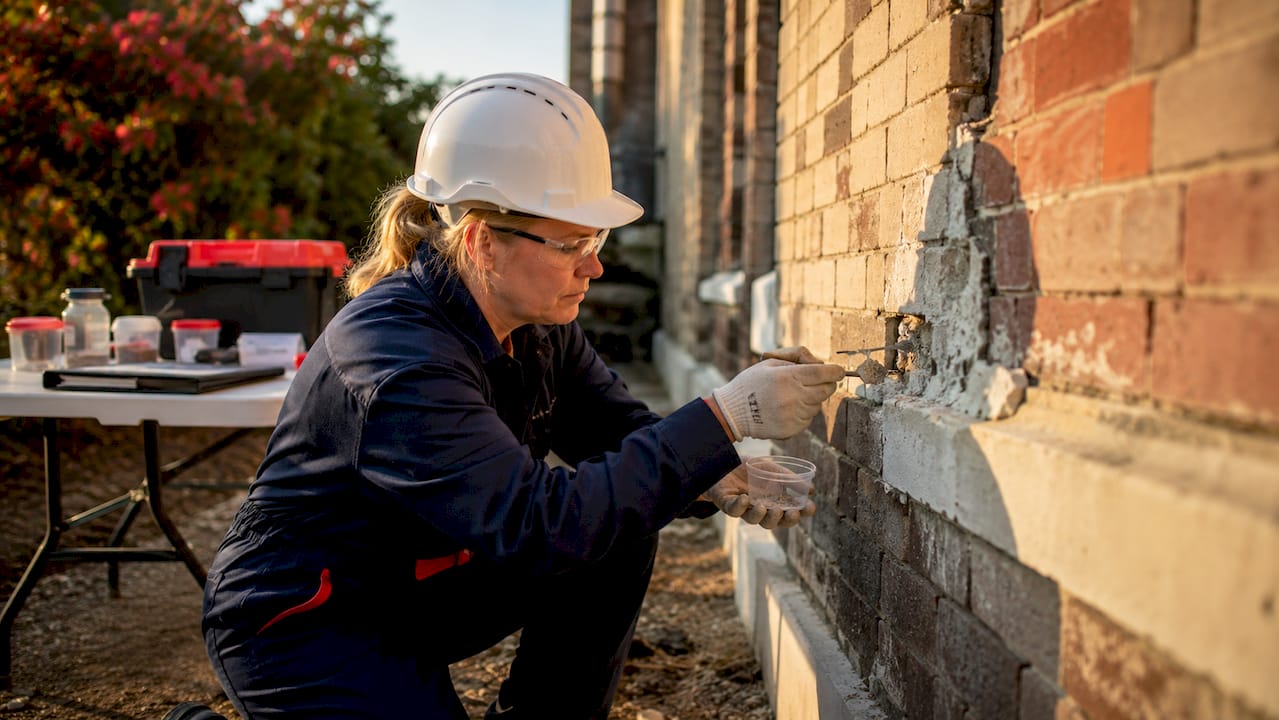
The asbestos inspection process in Sydney follows this same framework, with licensed assessors providing the documentation required for council and regulatory approval.
What risks arise from skipping asbestos inspection before demolition?
The risks of proceeding without a proper asbestos assessment fall into three categories: health, legal, and financial. Each is serious on its own. Combined, they can end a project and expose you to liability for years.
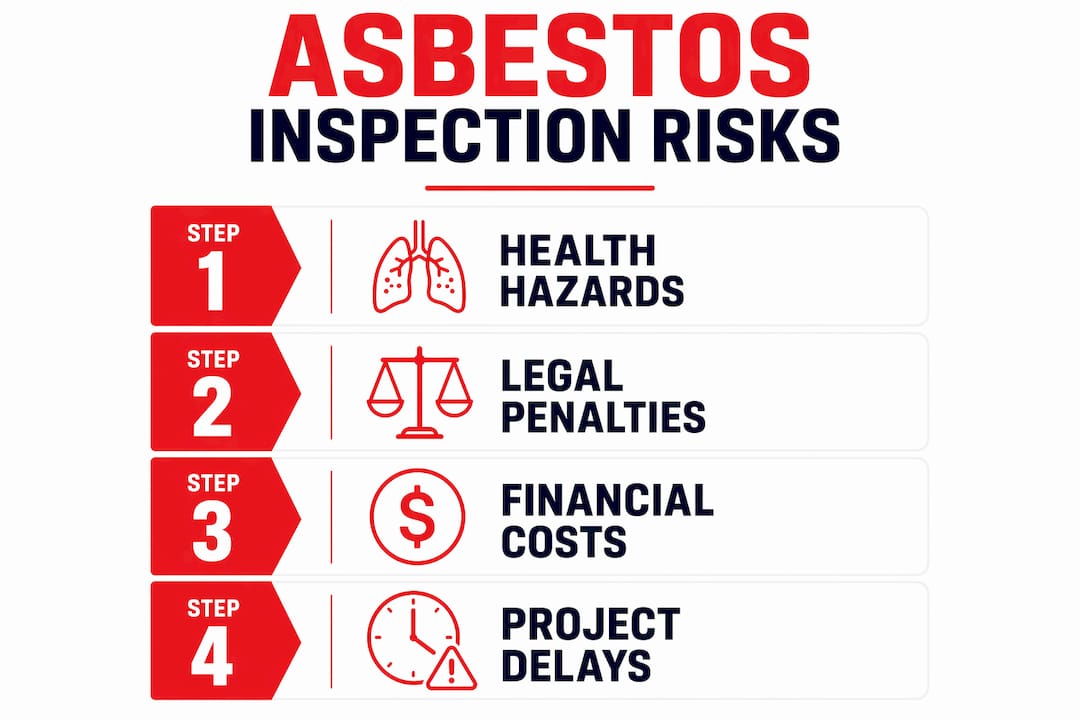
Health hazards in demolition
Asbestos fibres released during demolition are invisible to the naked eye and remain airborne for extended periods. Workers on site face the highest exposure risk, but neighbours and bystanders are also at risk when fibres travel beyond the site boundary. Diseases caused by asbestos exposure, including mesothelioma and asbestosis, have latency periods of 20–40 years. That means the health consequences of a single demolition project can surface decades later.
“Many treat asbestos surveys as a box-ticking exercise, but in reality, these surveys underpin all safety and planning decisions on the project.” — Acorn Analytical Services
Legal and financial consequences
The legal exposure from skipping a pre-demolition survey is substantial:
- Stop-work orders: Regulators can halt your project immediately upon discovering non-compliance, leaving machinery idle and workers stood down.
- Fines and prosecution: Non-compliance risks include severe fines and criminal liability for site owners, project managers, and contractors.
- Emergency abatement costs: Discovering asbestos mid-demolition requires immediate work stoppage, emergency containment, and unplanned removal. These costs are significantly higher than planned abatement.
- Insurance voidance: Most construction insurance policies exclude claims arising from known or discoverable asbestos hazards that were not properly managed before work began.
- Civil litigation: Affected workers or neighbours can pursue compensation claims years after exposure. Without a survey report demonstrating due diligence, your legal position is extremely weak.
Demolition asbestos survey failures that lead to mid-project asbestos discoveries are among the most costly events in construction project management. The cost of a proper survey is a fraction of the cost of managing an unplanned asbestos incident.
How to choose the right asbestos inspector for your project
Choosing the right inspector is as important as conducting the inspection itself. A poor quality survey creates a false sense of security and leaves hidden asbestos in place to be disturbed during demolition.
Qualifications versus experience
An entry-level asbestos assessor licence in Australia requires minimal formal training, often just a short course and basic educational requirements. That minimum qualification does not guarantee the expertise needed to find asbestos concealed in complex building structures. Prioritise inspectors with a long track record of demolition-specific surveys, not just general building inspections.
Choosing inspectors solely by licence overlooks the critical expertise required to find hidden asbestos and protect your project. Ask for examples of previous demolition survey reports and check references from past clients.
Independence from abatement contractors
Independent licensed asbestos inspectors must be engaged separately from the company that will conduct the removal. When the same contractor inspects and removes asbestos, there is a financial incentive to either over-report (to increase removal revenue) or under-report (to win the demolition contract with a lower quote). Independent inspection eliminates that conflict and produces a report you can rely on.
Retaining your survey report
Asbestos survey reports are permanent legal records that do not expire. They are required for future property transactions, insurance claims, and any litigation arising from asbestos exposure. Store the original report securely and provide copies to all relevant parties, including your demolition contractor and local council.
Pro Tip: Request a digital copy of your survey report in PDF format and store it in at least two separate locations. Losing this document can create significant problems if a legal dispute arises years later.
How accurate survey data controls project costs
High-accuracy asbestos data enables precise abatement planning and direct cost control. When the survey clearly identifies every asbestos-containing material, its location, and its condition, the abatement contractor can price the removal accurately. Vague or incomplete surveys lead to scope creep, variation orders, and project delays. A thorough survey is an investment that pays for itself in avoided cost overruns.
For guidance on the asbestos removal permit process, including how survey reports integrate with permit applications, that resource covers the full sequence from inspection through to approved removal.
Key takeaways
A pre-demolition asbestos survey is a legal requirement, a health safeguard, and a project cost control tool that no demolition project in Australia can legally or safely proceed without.
| Point | Details |
|---|---|
| Legal requirement | A completed asbestos survey and 10-working-day notification are mandatory before demolition begins. |
| Intrusive survey methods | Demolition surveys open walls and sample concealed voids to find hidden asbestos management surveys miss. |
| 3–4 week timeline | Schedule your survey at project start to avoid delays caused by lab analysis and notification periods. |
| Independent inspector | Separate your inspector from your abatement contractor to eliminate conflicts of interest. |
| Permanent legal record | Retain your survey report indefinitely for property transactions, insurance, and litigation protection. |
What I’ve learned from watching projects go wrong without proper surveys
I’ve seen the same mistake repeated more times than I’d like to count. A property owner gets a demolition quote, the price looks good, and the contractor quietly skips or rushes the asbestos survey to keep costs down and start quickly. Three weeks into demolition, someone finds fibrous material in a wall cavity. Work stops. Emergency containment goes up. The project that was supposed to take six weeks takes six months.
The owners who suffer most are the ones who treated the survey as a bureaucratic hurdle rather than the foundation of their project plan. They didn’t ask whether the inspector was independent. They didn’t check how many demolition surveys the inspector had completed. They accepted a survey report that was thin on detail because it came with a low price tag.
The uncomfortable truth is that a cheap survey is often worse than no survey at all. It creates documented confidence in findings that are incomplete, and that false confidence is what drives the decision to proceed without proper abatement. At least when no survey exists, everyone knows the risk is unquantified.
Treat your asbestos survey as the first and most important document in your demolition project file. The quality of every decision that follows, from abatement planning to contractor selection to council approvals, depends on the accuracy of that report. Get it right before anything else moves.
— Tarek
How Missiondemolition handles asbestos inspection and safe demolition
Missiondemolition provides fully licensed asbestos inspection and removal services across Sydney and NSW, with a team that understands both the regulatory requirements and the practical realities of demolition project management. Every project starts with a thorough pre-demolition survey conducted by independent, experienced assessors who know how to find asbestos in complex building structures.
For homeowners planning a knockdown rebuild, the residential demolition service covers the full sequence from survey through to site clearance. For commercial and industrial projects requiring specialist asbestos management, the asbestos removal Sydney service delivers compliant, documented removal with 24/7 support throughout. Contact Missiondemolition to get a clear, honest quote before your project timeline is set.
FAQ
Can you demolish a building without an asbestos inspection?
No. Australian law requires a completed asbestos survey and mandatory notification period before demolition can legally begin. Proceeding without one exposes you to stop-work orders, fines, and criminal liability.
How long does a pre-demolition asbestos survey take?
The full process takes 3–4 weeks, including site inspection, laboratory analysis, report preparation, and the mandatory 10-working-day notification period.
What is the difference between a demolition survey and a management survey?
A demolition survey uses intrusive, destructive methods to find all asbestos-containing materials, including those hidden in wall cavities and concealed voids. A management survey only identifies accessible asbestos in occupied buildings.
Who can legally conduct an asbestos inspection before demolition?
Only a licensed asbestos assessor under the WHS Regulation can conduct a pre-demolition survey. The inspector must be independent from the contractor performing the asbestos removal to avoid conflicts of interest.
Do I need to keep my asbestos survey report after demolition is complete?
Yes. Survey reports are permanent legal records required for future property transactions, insurance claims, and any litigation arising from asbestos exposure. They do not expire and must be retained indefinitely.