
An asbestos waste manifest is a legally binding, chain-of-custody document that tracks asbestos-containing material from its removal site through transport to an authorised disposal facility. Known formally as a regulated asbestos waste manifest, this document is not optional. It is a legal requirement under both federal and state regulations across Australia, and every party involved in the waste stream must sign it. Generators, transporters, and disposal facility operators each carry responsibility for completing their section accurately. Without a correctly completed manifest, you face potential fines, investigations, and personal liability for illegal dumping, even if the waste left your property legally.
What is an asbestos waste manifest and what does it contain?
An asbestos waste manifest is a mandatory chain-of-custody document that records every transfer of asbestos-containing waste until it reaches an approved landfill. It creates an auditable paper trail that regulators, insurers, and courts can examine. No other document in asbestos waste management carries the same legal weight.
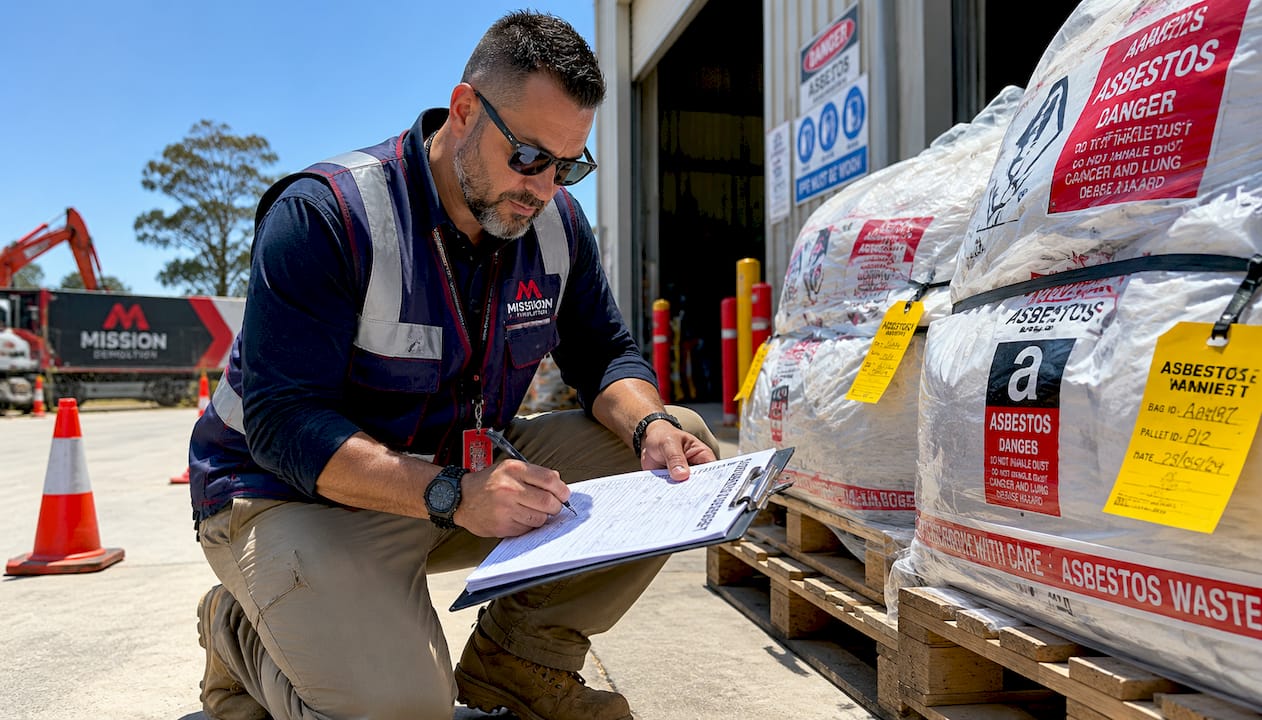
The manifest captures specific data at each stage of the disposal process. Every field matters because missing or inaccurate information can trigger a compliance investigation or cause landfill rejection.
A complete manifest includes:
- Generator details: Full legal name, site address, contact number, and licence or ABN.
- Transporter details: Company name, vehicle registration, and transport licence number.
- Waste quantity: Volume measured in cubic metres or tonnes, recorded before loading.
- Waste description: Type of asbestos material (friable or non-friable), its condition, and packaging method.
- Dated signatures: Signed by the generator at collection, the transporter during transit, and the disposal facility operator on receipt.
Pro Tip: Measure waste volume before the transporter arrives. Tipping fees at licensed landfills run from $35 to $150 per cubic yard, and an inaccurate measurement on the manifest can result in rejection at the gate and a costly return trip.
Accurate data on the manifest also protects you financially. Correct manifest measurements avoid rejection and delays at disposal facilities, which add unexpected costs to any project.
How do asbestos waste manifests support compliance and risk management?
Asbestos abatement is largely a documentation business. Physical removal is only half the job. The manifest closes the loop by proving that waste did not end up in an illegal dump, a roadside skip, or an unlicensed facility.
Diligent manifest documentation prevents you from being held liable for illegal dumping after waste leaves your site. This is a critical point that many homeowners and project managers overlook. Once asbestos waste is generated, the generator retains legal responsibility until a signed manifest confirms lawful disposal.
“The manifest accountability system prevents illegal dumping and ensures environmental compliance with auditable records at every transfer point.” — Sustainability Directory
Federal rules set a baseline, but state and local authorities often add notification, permit, and documentation requirements based on project size and scope. In New South Wales, the EPA and SafeWork NSW both impose requirements that go beyond federal minimums. Projects that fall under certain volume thresholds may still require local council notification and additional asbestos removal paperwork.
Non-compliance carries real consequences. Regulators can issue substantial fines, launch site investigations, and pursue personal liability against property owners and project managers. The NSW asbestos removal regulations make clear that ignorance of manifest requirements is not a valid defence. Engaging a licensed contractor is the most reliable way to avoid these risks, because licensed contractors handle manifests and regulatory obligations correctly, reducing your liability from the outset.
What are the steps to correctly manage asbestos waste manifests?
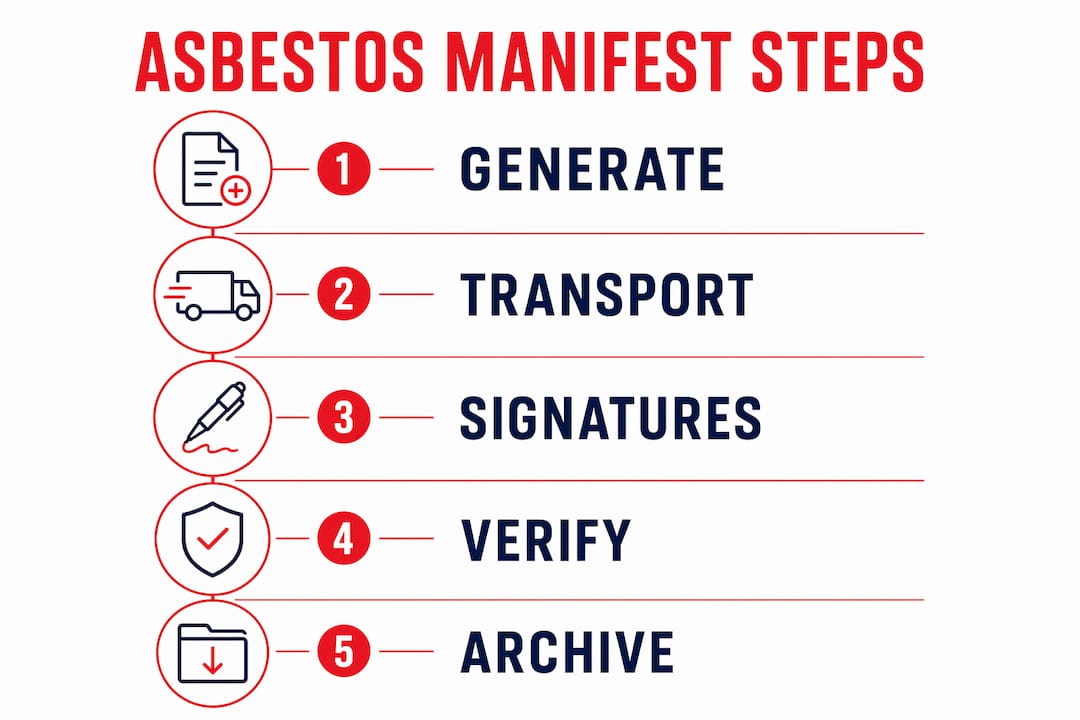
Managing an asbestos waste manifest correctly follows a defined sequence. Skipping any step creates a gap in the chain of custody and exposes you to regulatory risk.
- Prepare the manifest before work begins. The generator completes the top section with site details, waste description, and estimated volume before the transporter arrives. Use the asbestos removal compliance checklist to confirm all fields are filled correctly.
- Sign at collection. The generator signs and dates the manifest when the transporter takes custody of the waste. The transporter countersigns at the same time.
- Transport under correct conditions. The transporter carries the manifest with the load at all times. Asbestos transport regulations require sealed, labelled packaging and a vehicle that meets safety standards for hazardous material transport.
- Obtain disposal facility certification. The landfill operator signs the manifest on receipt, confirming the waste was accepted and deposited correctly. This is the final link in the chain of custody.
- Track the return of the signed copy. The generator must receive a signed copy back from the disposal facility. If a signed copy does not return within 35–45 days, it triggers a mandatory regulatory investigation.
- Initiate follow-up if the manifest is overdue. Contact the transporter and disposal facility in writing. Document every communication. Failure to follow up creates an association with illegal dumping, even if you acted in good faith.
- Store records for the required period. Federal rules require retention of signed manifests for at least three years. State rules often mandate longer periods, with some states requiring five or more years of storage.
Pro Tip: Treat the manifest as a tracked digital record, not a paper form. Scan every signed copy immediately and store it in a named folder with the project date and address. This makes retrieval fast if a regulator requests documentation years later.
The most common pitfall is assuming the transporter will handle everything. The generator carries legal responsibility for the manifest until a signed copy returns. Stay active in the process.
How do asbestos waste manifests fit into the broader waste management framework?
The manifest does not operate in isolation. It sits within a wider system of asbestos waste management requirements that cover packaging, labelling, transport, and disposal site standards.
Asbestos waste must be double-bagged in heavy-duty polyethylene, clearly labelled with the asbestos warning symbol, and sealed before transport. The manifest references the packaging method, so any mismatch between the physical load and the document description raises a red flag at the landfill gate.
| Element | Requirement | Manifest connection |
|---|---|---|
| Packaging | Double-bagged, heavy-duty polyethylene | Packaging method recorded on manifest |
| Labelling | Asbestos warning symbol on each bag | Confirmed by transporter signature |
| Transport vehicle | Enclosed, sealed, meets hazardous goods standards | Transporter licence recorded on manifest |
| Disposal site | EPA-licensed asbestos landfill only | Facility signature closes chain of custody |
| Volume measurement | Cubic metres or tonnes, measured before loading | Determines tipping fees and acceptance |
Transport vehicles must meet hazardous goods standards under Australian law. The transporter’s licence number on the manifest confirms this compliance. Sending asbestos waste in an unlicensed vehicle voids the manifest and exposes both the generator and transporter to prosecution.
Disposal sites must hold an EPA licence to accept asbestos. Not every landfill accepts asbestos waste, and the manifest must name the specific facility. Sending waste to an unlicensed site, even accidentally, creates serious legal exposure. For commercial asbestos removal projects, the volume of waste makes accurate manifest data even more critical, because tipping fees scale directly with the recorded quantity.
Licensed contractors coordinate all of these elements. They know which facilities accept asbestos in each region, they carry the correct transport licences, and they complete asbestos disposal documents accurately. For homeowners and businesses without specialist knowledge, hiring licensed removal contractors is the most reliable way to keep every element of the framework aligned.
Key takeaways
An asbestos waste manifest is a legally binding chain-of-custody document, and the generator retains legal responsibility for the waste until a signed copy confirms lawful disposal.
| Point | Details |
|---|---|
| Manifest is legally binding | Every generator, transporter, and disposal facility must sign the manifest to close the chain of custody. |
| Signed copy must return within 35–45 days | If the signed manifest does not return, the generator must initiate a formal investigation immediately. |
| State rules often exceed federal minimums | Some states require manifest retention for five or more years, so check your local jurisdiction. |
| Accurate volume measurement matters | Incorrect waste quantities on the manifest can cause landfill rejection and additional fees. |
| Licensed contractors reduce your liability | Professionals handle all asbestos disposal documents correctly, protecting you from fines and legal risk. |
Why manifests deserve more attention than they get
I have seen projects where the physical removal was textbook perfect and the site was clean within a day. Then, six weeks later, the client received a compliance notice because the signed manifest never came back and nobody followed up. The asbestos was gone, the site was safe, but the paperwork gap created a legal problem that took months to resolve.
Most people treat the manifest as an administrative formality. It is not. It is the only evidence that your asbestos waste reached a lawful destination. Without it, you cannot prove compliance to a regulator, an insurer, or a future property buyer. I always tell clients to calendar the 35-day follow-up date the moment the transporter leaves the site. That one habit prevents the most common compliance failure I see.
The other thing I have noticed is that people underestimate how much variation exists between jurisdictions. What satisfies a federal auditor may fall short of what the NSW EPA expects. Checking your non-compliant disposal examples before you start a project is a fast way to understand where others have gone wrong and avoid repeating those mistakes.
Manifests are also becoming more digital. Treating them as tracked electronic records from day one makes audits straightforward and removes the risk of losing a paper copy. If your contractor still hands you a single paper form and walks away, ask questions.
— Tarek
How Missiondemolition handles asbestos waste manifests for you
Missiondemolition manages every stage of asbestos waste documentation on behalf of homeowners and businesses across Australia. Their fully licensed team completes all asbestos removal paperwork, coordinates with approved transport operators, and tracks the return of signed manifests to confirm lawful disposal.
For residential and commercial projects in Sydney and NSW, Missiondemolition’s asbestos removal Sydney service covers the full compliance chain, from site assessment through to final manifest confirmation. Their team understands the specific requirements of SafeWork NSW and the EPA, so nothing falls through the cracks. Contact Missiondemolition to get a quote and remove the legal and health risk from your project entirely.
FAQ
What is an asbestos waste manifest used for?
An asbestos waste manifest is a chain-of-custody document that tracks asbestos-containing waste from its removal site through transport to an authorised disposal facility. It creates a legally auditable record that proves the waste was handled and disposed of lawfully.
Who is responsible for completing the manifest?
The generator (the property owner or their licensed contractor) initiates the manifest, the transporter signs it at collection, and the disposal facility operator signs it on receipt. All three parties share responsibility for accurate completion.
How long must asbestos waste manifests be kept?
Federal rules require signed manifests to be retained for at least three years. State rules often require longer periods, with some jurisdictions mandating five or more years of storage.
What happens if the signed manifest does not return?
If the signed copy does not return within 35–45 days, the generator must initiate a formal investigation into the waste’s whereabouts. Failing to follow up creates legal liability for illegal dumping.
Do homeowners need a manifest for small asbestos removal jobs?
Yes. Even small quantities of asbestos waste require a manifest if they are transported off-site to a licensed landfill. Hiring a licensed removal contractor is the safest approach, as they manage all documentation and regulatory obligations on your behalf.